Office Outfit Inspiration for Creative Workplaces
In contemporary work environments that prioritize creativity and innovation, the concept of professional attire has shifted considerably. Traditional strict dress codes are giving way to more flexible approaches, allowing employees to blend polished elements with personal expression. One such approach involves combining tailored blazers with sneakers or colorful trousers. This method provides a way to maintain a professional image while reflecting individual taste and comfort. The following sections explore the context, key wardrobe pieces, and strategies for assembling outfits that suit creative workplaces.
Understanding how to navigate this balance requires awareness of the specific workplace culture, as expectations can vary widely even within creative fields. Some offices may lean toward a more relaxed interpretation of business casual, while others maintain a subtle expectation of structure through tailored pieces. By examining the components involved and the ways they interact, professionals can make informed choices about their daily attire without relying on rigid formulas.
Understanding the Context of Creative Workplace Attire
Creative workplaces often embrace diversity in appearance as a reflection of the innovative thinking they encourage. However, even in such environments, there is usually an underlying expectation of tidiness and intentionality. Dress codes, when they exist, may be described as “smart casual” or “creative professional,” leaving room for interpretation. The key is to observe the common practices within the company and note how colleagues combine formality with personal flair.
Many professionals find that observing the level of formality required for different activities, such as client presentations versus internal brainstorming sessions, helps guide outfit choices. A tailored blazer, for example, can be worn for a meeting and removed for a more casual work session. This adaptability makes certain items particularly valuable in creative settings. Additionally, understanding that personal style can coexist with professionalism encourages exploration of different combinations.
The Role of Tailored Blazers in Professional Outfits
Tailored blazers serve as a foundation for many creative workplace outfits because they introduce structure without requiring an entire suit. Their clean lines and defined shoulders create a polished silhouette that signals attention to detail. When selected in neutral colors such as navy, charcoal, or beige, blazers can be paired with a wide range of other garments, making them a versatile investment.
Beyond color, the fabric and cut of a blazer also influence how it interacts with more casual or colorful pieces. Unstructured blazers made from cotton or linen blends tend to feel less formal and pair naturally with sneakers. More structured wool blazers, on the other hand, can still be softened by pairing them with relaxed trousers or casual footwear. The choice of blazer ultimately depends on the desired level of formality and the overall aesthetic one wishes to convey.
Integrating Sneakers for Comfort and Modernity
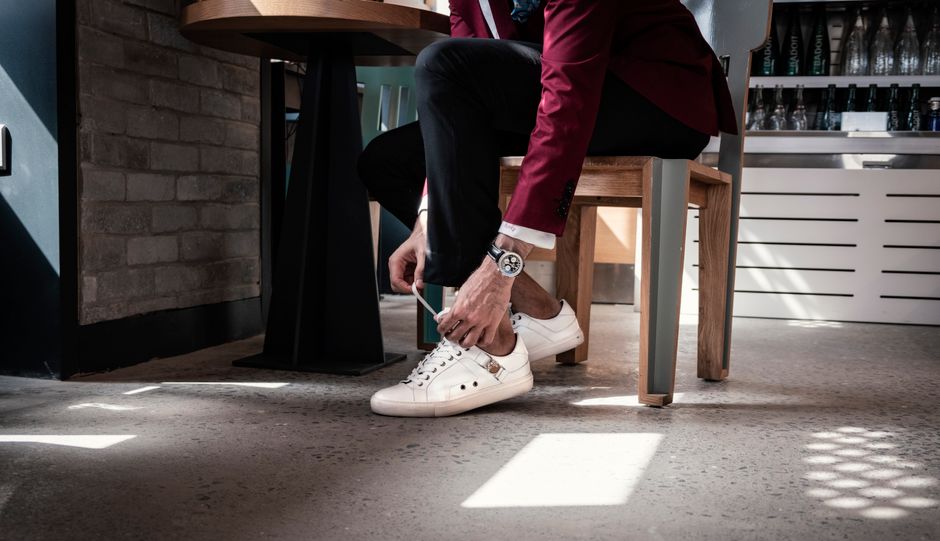
Sneakers have become increasingly accepted in professional settings, particularly in creative industries where comfort and mobility are valued. The type of sneaker selected matters: minimalist leather or canvas sneakers in solid colors tend to blend more seamlessly with tailored pieces than heavily athletic or brightly patterned shoes. White sneakers, for instance, offer a clean contrast to darker blazers and trousers.
Wearing sneakers with a blazer changes the overall tone of the outfit, making it feel more approachable and current. This combination is especially suitable for days that involve walking between locations or standing for extended periods. It is worth considering that the formality of the rest of the outfit can be adjusted accordingly. For example, pairing a blazer with tailored trousers and minimalist sneakers maintains a coherent look, while distressed denim might shift the balance too far toward casual.
Using Colorful Trousers to Add Personality
Introducing color through trousers is a direct way to express individual style while keeping the upper body structured. Trousers in shades like burgundy, forest green, mustard, or soft pastels can be paired with neutral blazers to create a visually interesting ensemble. Patterns such as checks or subtle plaids offer another layer of texture without overwhelming the overall look.
The key to incorporating colorful trousers lies in balancing the rest of the outfit. A neutral blazer and simple top, such as a white button-down shirt or a plain knit, allow the trousers to stand out without clashing. The choice of footwear, whether sneakers or more traditional shoes, also influences the outcome. Some professionals opt for sneakers in a color that complements the trousers, while others prefer a neutral shoe to keep focus on the pants.
Combining Elements into Cohesive Outfits
Assembling a complete outfit requires consideration of how each piece works together in terms of color, texture, and formality. A common approach is to start with a tailored blazer in a neutral tone, then select trousers that provide contrast, and finally choose footwear that bridges the two. Sneakers can either echo a color from the trousers or remain neutral to ground the look.
Texture also plays a role: a smooth cotton blazer paired with wool trousers and leather sneakers creates a mix of finishes that feels intentional. Similarly, a linen blazer worn with chinos and canvas sneakers produces a lighter, more relaxed appearance. Experimenting with different combinations allows individuals to discover what feels authentic and appropriate for their specific work environment. It is often helpful to test outfits on days with fewer external meetings to gauge how they are received.
Adapting Outfits to Different Creative Work Settings
Creative workplaces are not uniform, and the same outfit may be perceived differently depending on the industry or company culture. For example, a design agency might welcome bold patterns and unconventional pairings, while a tech startup may lean toward minimalist and functional clothing. Understanding these nuances helps in making choices that feel both comfortable and contextually suitable.
One method for adapting is to consider the primary activities of the day. Days focused on collaborative work or internal meetings may allow for more casual elements, such as colorful trousers and sneakers. Days involving client interactions or presentations might call for a more conservative combination, such as a blazer with darker trousers and cleaner sneakers or even leather shoes. Having a few versatile pieces on hand makes it easier to adjust without overthinking each morning.
Ultimately, the goal is to create a wardrobe that supports both professional responsibilities and personal expression. By understanding the principles behind blending tailored blazers with sneakers or colorful trousers, individuals can approach their daily attire with confidence and clarity. The process of experimenting with different combinations, observing workplace norms, and refining personal style contributes to a more satisfying and authentic work experience.